Onychomycosis - Fungal nail frustration
Treatment started: 2nd May 2024
Final Appointment: 29th July 2025
"I've had fungal nails for a long time now and don't like the look of them"
Fungal nails can start out being minor inconveniences, however as time goes by the infection begins to effect the overall health of the nail, the matrix (area where your nails form and grow from) and even the surrounding nails too. This patient had been battling fungal nails for a long, long time and decided "enough is enough" and called for my help.
One look and I fully agreed with my patient, it was a textbook case. Discoloured, thick, crumbly and very short due to the nail frequently breaking away.
Together we devised a treatment plan:
- On the day - Nails were cut and burred to remove as much infected nail & debris as possible, using nippers and a nail drill (Top row: Left - Before treatment, Right - After treatment)
- GP referral sent for Terbinafine tablets to attack the infection from the inside
- Curanail 5% lacquer to apply once a week on the infected nails - Usually doesn't work on severe infection (1st and 2nd nails in pictures), however alongside the medication we believed it would help.
After 3 months
- One the day - Same treatment as before to investigate health of the nail. Nails were much stronger and the lines present before had decreased in severity.
- Some healthy nail had begun to grow from the root, showing the medication was doing its job internally.
- Nail was not as thick or crumbly.
- The smaller nails that were also infected have made amazing progress thanks to the Curanail.
Final result (1 year, 2 months)
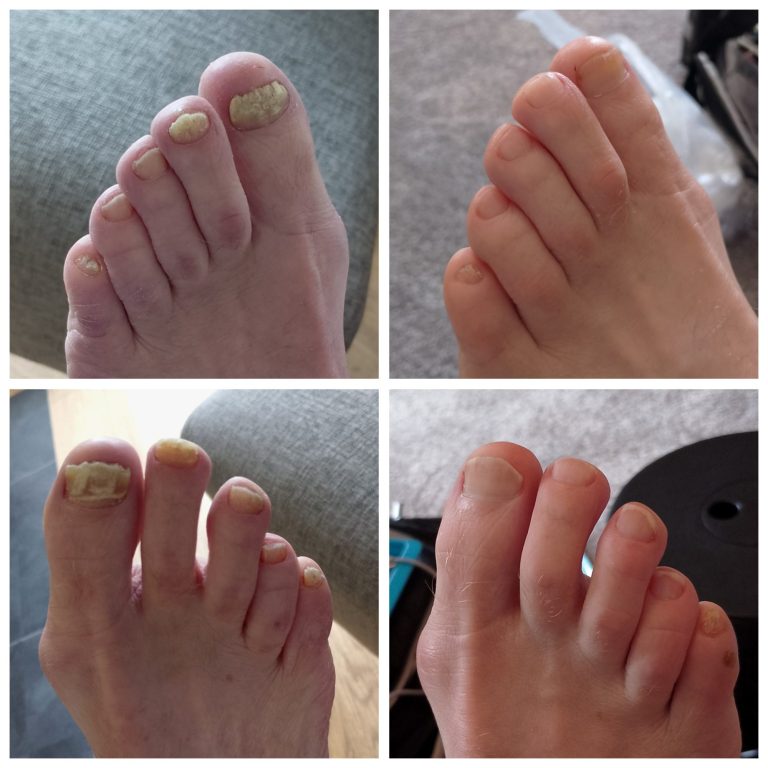
It took a long time to fully recover, (453 days to be exact) but it was well worth the patience. Thanks to good maintainence and the continued effort of my patient between appointments, the nails have been restored to their former glory! No more hiding them in socks and closed shoes, time to break out the sandels.
It's never too late to treat fungal nails. If you want some 'summer shoe' confidence back, start your journey now!
How to started:
Top row: Left foot - Day 1 as presented & after treatment
Bottom row: Right foot - Day 1 as presented & after treatment
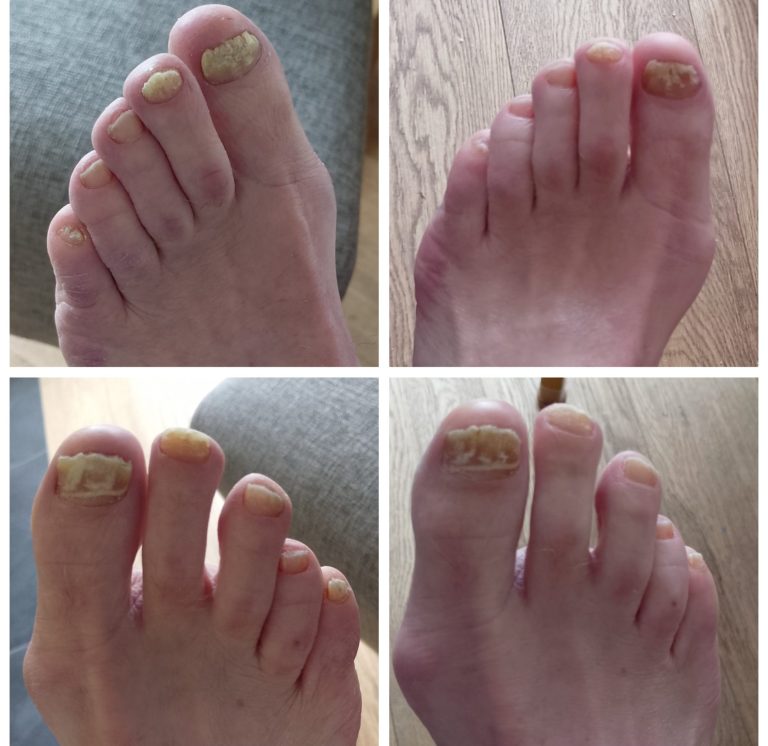
Amazing results from treatment!
Top row: Day 1 vs Day 453, left foot
Bottom row: Day 1 vs Day 453, right foot
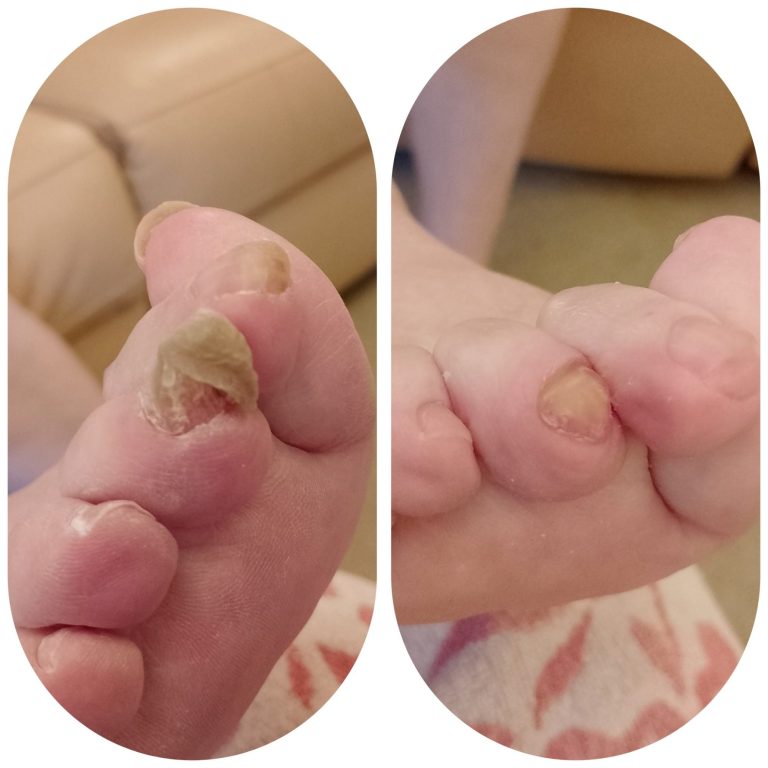
My Experience with Oychogryphosis
As this was my first solo experience with the condition, I decided to use a 'bit by bit' approach. Firstly, the free edge of the nail had grown down onto itself, making it very difficult to reduce the nail using nippers comfortably and safely. Instead, I used a Diamond ball Burr (Type 801 Dia 012) to slowly seperate the 'horn' from the rest of the nail.
Side note: Your hypochium is live skin underneath the nail that acts as a protective barrier, stopping bacteria, debris and moisture getting under your nail. It is very important to NOT remove the excess nail in one go, as you could catch it and cause bleeding or injection.
Once this part was removed, I switched to my Diamond bud burr (Type 602 Dia 050) to flatten the remaining nail as much as possible. This will also give the hypochuim time to retract.
The patient was advised to use Gehwol Protective Nail Oil to improve the overall health of the nail, to keep it soft and to encourage the hypochuim to shrink.
Onychogryphosis - The Ram's horn
Onychogryphosis, also known as the Ram's horn nail, is a nail disorder best characterised by extreme thickening, discolouration and curving of the nail plate. It is most common on the big toe, but can occur on any nail.
Causes
- Chronic trauma/pressure
- Neglected nail care
- Poor circulation
- Damage to the nail matrix
- Underlining issues (Skin disorders, fungal infections and vascular disorders)
Best treatment options
- Regular foot care to safely keep the nail short and managable
- Wear appropriate, comfortable footwear
- Soften the area with nail oil or a moisturiser with 25%-40% Urea
- In some extreme cases, the full removal of the nail by a qualified Podiatrist is required